
HLTH 2025 proved that healthcare’s optimism hasn’t vanished — it’s just found better boundaries. Amid the noise, leaders talked less about moonshots and more about mechanics. Real progress, it seems, comes not from shiny tech or slogans, but from doing the unglamorous work of integration, alignment, and trust.
The Quest for Seamless RPM: A Work in (Dis)Connection
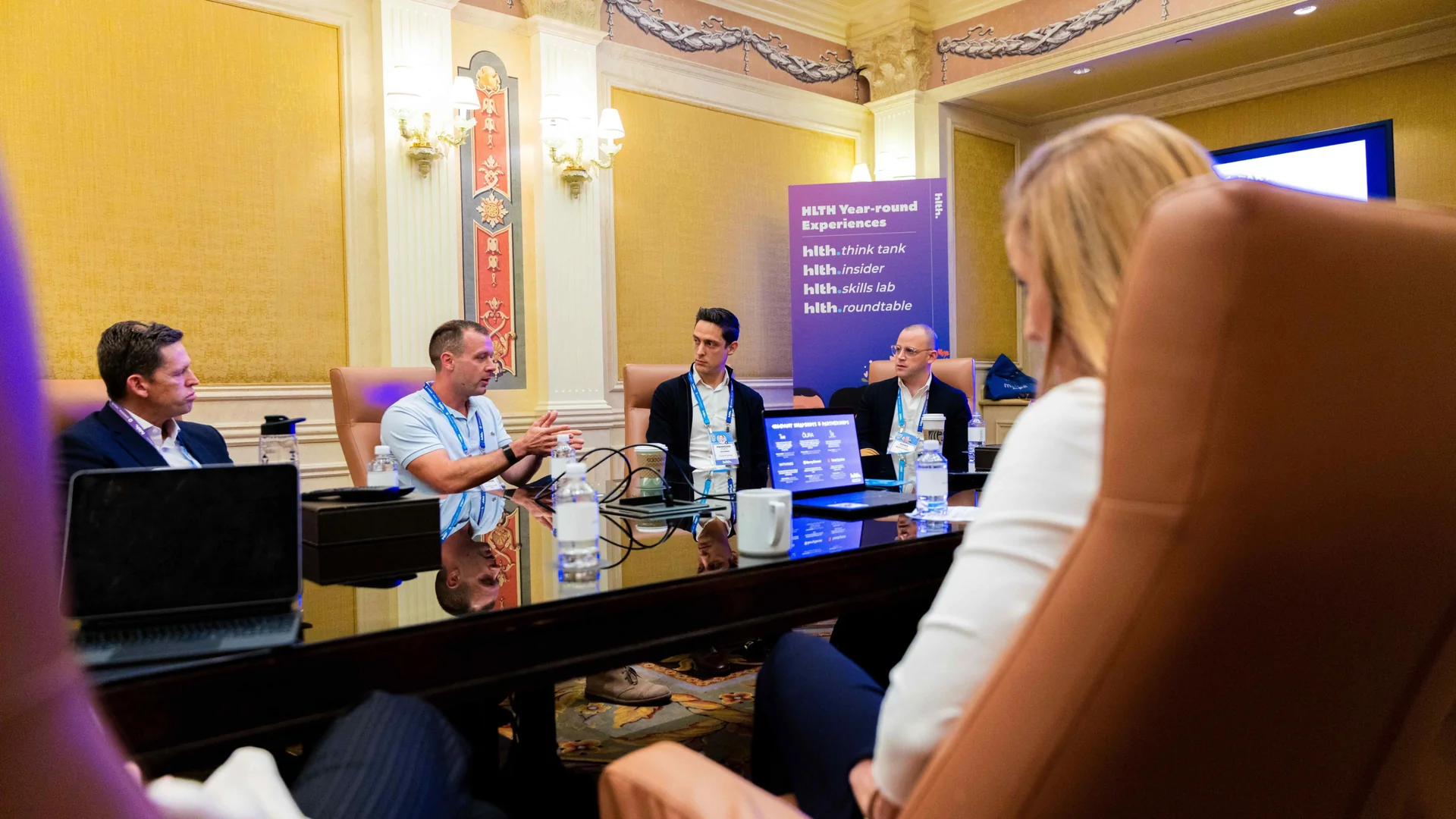
At this year’s HLTH, somewhere between the AI hype and the caffeinated optimism, we sat down with Infosys and a room full of health leaders to tackle what might be the most deceptively simple question in digital health: how do we make “remote patient monitoring” actually work?
The consensus? RPM has officially graduated from pilot purgatory, but it’s still sitting awkwardly at the grown-ups’ table. The tech is there; the infrastructure, not so much. Broadband gaps, device costs, and the realities of underfunded clinics make scaling hard, especially outside urban hubs. Even when the devices do their job, the data they produce can feel like an all-you-can-eat buffet without a plate.
What’s needed is translation — we must move from raw metrics to insight, and from signal to story. That’s where AI and automation are finally starting to earn their seat, triaging floods of data into something clinicians can actually act on. But the human side remains the real test. Until digital tools truly lighten workloads (not add to them), “connected care” will remain an aspiration rather than an established system. Still, glimpses of the future are there: ecosystem thinking, cross-condition RPM platforms, and maybe — just maybe — the beginnings of an actual connected continuum of care.
Cracking the Distribution Code: Or, How to Get Patients to Actually Use Stuff
In the carnival of healthcare innovation, building something transformative is only half the battle — the other half is getting anyone to actually use it. At HLTH, Ypsomed and Sidekick Health hosted a roundtable that dove straight into that uncomfortable truth. For all the talk of engagement and empowerment, distribution remains healthcare’s final boss.
The problem isn’t a lack of technology, it’s that no one seems to own the problem of getting these tools into people’s hands. Between regulatory, medical, commercial, and privacy teams, everyone’s rowing in different directions, often toward their own KPIs. The result? Brilliant solutions that never scale, marketing budgets chasing ghosts, and a collective case of attribution anxiety.
But there’s movement. Participants pointed to LLMs as potential bridges between data, devices, and patients. Cue, practicality — participants agreed it’s time to move past one-off brand campaigns and start building real ecosystems — ones that connect data, patients, and outcomes in measurable ways. ROI can’t just mean clicks or impressions anymore; it has to reflect lasting engagement and improved health. That shift depends on a foundation of trust, transparency, and shared infrastructure — things far harder to build than another app, but infinitely more valuable.
The takeaway: cracking the distribution code isn’t about another marketing channel. It’s about aligning the industry’s many moving parts into something that feels and functions like a system. Otherwise, we’ll keep inventing amazing things no one ever uses.
Digital Health Communities: The Anti-App Revolution
If HLTH had a drinking game, “patient engagement” would be the phrase that wipes out everyone before lunch. But behind the buzzword lies a real shift — one that Aptar Digital Health helped spotlight in a candid conversation about what digital engagement actually looks like when patients lead the way.
The consensus: patients don’t want another branded app. They want trusted spaces that speak to their condition, not a company logo. As one participant noted, people living with chronic conditions already juggle enough: what they need is relevance, not repetition. That’s pushing pharma to think “above brand” and focus on ecosystems built on shared trust, not marketing ROI.
Yes, cue practicality again — it’s not just about community building; it’s about data. Linking patient-generated insights with clinical and real-world datasets is where the real value lives. Privacy and integration headaches aside, those connections are the key to understanding what works, when, and for whom.
The conversation ended on a hopeful (and slightly rebellious) note: the future of digital health might not belong to the companies with the biggest apps, but to those bold enough to share — data, platforms, and even credit. Collaboration, not competition, might finally be the true competitive advantage.
Beyond the Shot: Building the GLP-1 Ecosystem
If HLTH 2025 had a soundtrack, it would probably be the hum of GLP-1 conversations across the event floor. But while the drugs have stolen the spotlight, the smarter question — and the one Step One Foods gathered leaders to unpack — is what comes after the injection.
Everyone agreed: medication alone won’t fix metabolic health. GLP-1s are a powerful start, but without nutrition, behavior change, and ongoing support, results fade faster than most pilot programs. It was a reminder that lasting results come from habits, not headlines. Food, movement, and mindset still make a real difference.
The conversation turned to ecosystems — not the buzzword kind, but the kind that require pharma, payers, digital health players, and nutrition partners to actually talk to each other. Sustainable care models will depend on shared incentives and shared data, not short-term sponsorships.
And for once, the data might just lead the way. Wearables, connected devices, and real-world outcomes are helping tailor nutrition and dosing to each individual, proving that personalization isn’t just marketing fluff. The challenge now is scaling it: linking lifestyle, medicine, and access into one coherent system. Because if GLP-1s changed the game, integrated ecosystems will decide who actually wins.