Author:

Anyone who runs a healthcare practice knows too much of the day is spent managing payments and scheduling. The systems that work well in a hospital gift shop or cafeteria aren’t designed for the complexities of a medical or dental practice.
In a practice, the amount owed can change after insurance billing. A patient might have a copay today, then receive a statement weeks or months later. Front-desk staff often juggle deductibles, coinsurance, secondary coverage and payment plans, while trying to keep the schedule moving with limited personnel.
What makes healthcare and dental payments especially difficult is that they are rarely an isolated experience. They’re a series of steps spread across the patient journey: check-in, treatment, insurance adjudication, follow-up billing and, in some cases, ongoing payments over time. Practices need payment systems built for that reality.
Disconnected systems create friction for everyone
I recently went to a doctor’s appointment where a sign taped to the door said to check in at the kiosk. The “kiosk” turned out to be an iPad on a rolling stand with a PIN pad left on a shelf off to the side. When I went to pay, it was a different device with a different PIN pad. Even then, the front desk staff had a separate screen and a PIN pad. These are the kinds of confusing, disconnected systems that make a patient decide to pay later.
This was at a major medical center in New York City, so it’s not hard to imagine the challenges small and medium-sized practices across the country face.
Disconnected devices and different vendors for online, text-to-pay and point-of-care payments create extra work for staff, confusion for patients and leave funds trapped in accounts receivable systems that span both payer reimbursement and patient payments.
The risky business of legacy payments
When payment history and sensitive details are stored in spreadsheets, printed notes or emailed files, exposure increases. Modern systems are designed to limit manual touchpoints and remove the risky workarounds that busy teams resort to when they don’t have the right tools for the job.
In healthcare, outdated systems can quickly become a compliance problem. When staff rely on workarounds to keep payments moving, sensitive patient and payment information can end up in places it should never be. A modernized payment system helps reduce that risk by keeping protected information within secure, purpose-built systems instead of scattering it across manual processes.
Modernized payments can transform a practice
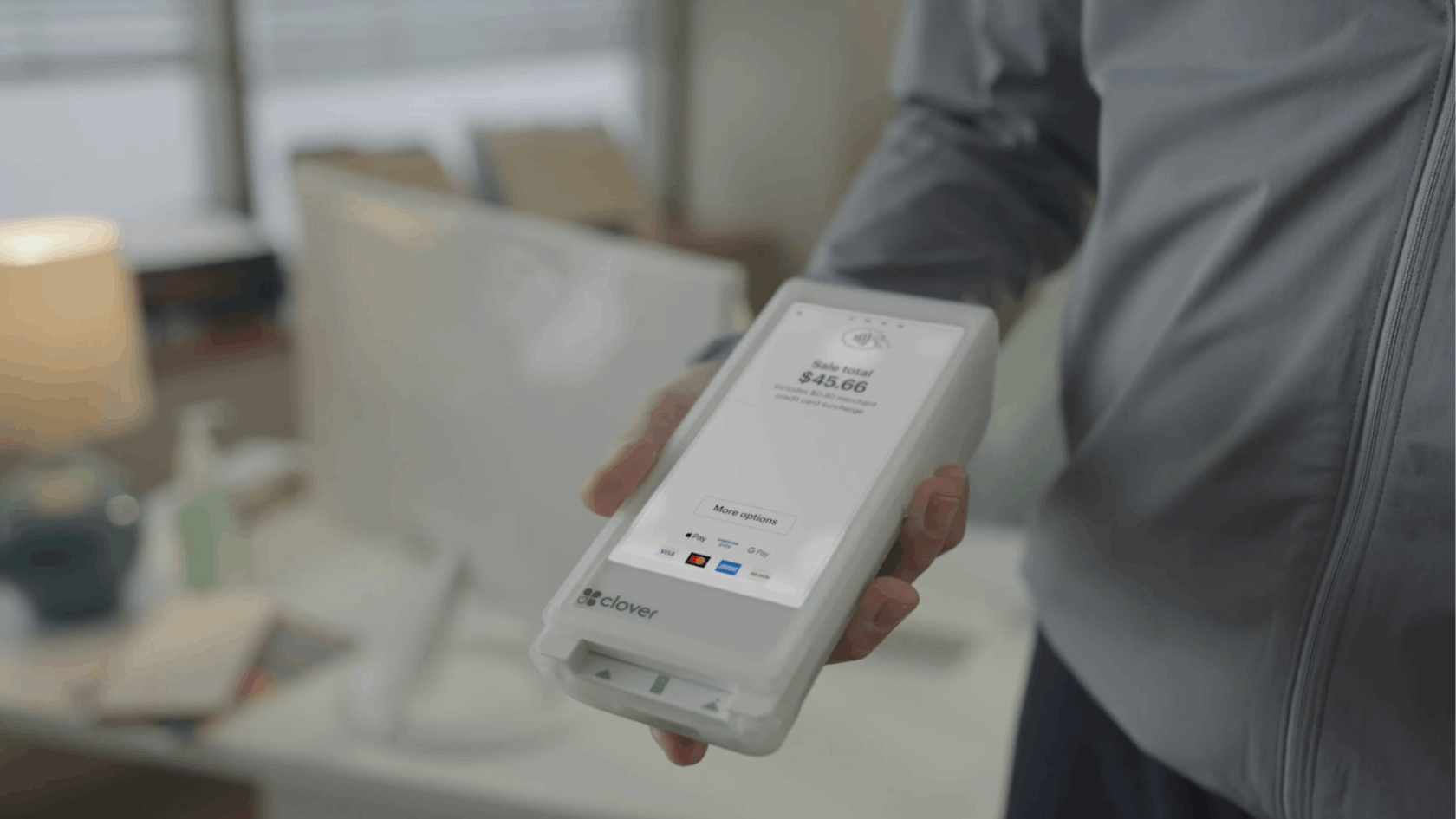
Clover has partnered with Rectangle Health to deliver a payment solution built for small and midsize healthcare practices. It brings together EHR/PMS integration, workflows designed with HIPAA compliance in mind, scheduling support and the payment options patients expect, including online pay, text-to-pay and flexible payment plans. According to Rectangle Health data, practices that have introduced these types of modern capabilities have reported significant gains in collections, speed and staff efficiency.
Practices that modernize payment operations with integrated software, workflows designed with HIPAA compliance in mind, automation and patient-friendly payment options often see measurable results. A connected system reduces front-desk burden, improves the patient experience and gives teams a clearer path to revenue collection.
For example, securely storing patients’ preferred payment methods – known as card-on-file – can nearly double the rate of time-of-service collections. One dental services office saw time-of-service collections grow from 30% to 97%. They also reduced outstanding accounts receivable by 65%. Improvements at that scale change cash flow and free up staff to focus on what matters most: patients.
HIPAA-compliant workflows and integration with EHR/PMS platforms can help practices manage risk and create a smoother experience for patients. Systems modernization of this kind can reduce payment processing time by up to 70%. When payments follow a cleaner path, staff can focus on exceptions rather than chasing routine balances.
Convenient options like 24/7 online bill pay and text-to-pay make it easier for patients to pay and improve satisfaction with the process. Recurring payments that allow patients to break up payments or pay flexibly over time is another satisfaction driver. It can reduce a patient’s financial stress and generate more predictable cash flow for your practice. In fact, it is common to see a 47% decrease in outstanding accounts receivable when reminders, digital payment options and automated posting work as one system.
We’ve seen a 15% improvement in patient show rates after streamlining the payment experience. It makes sense from a productivity standpoint. The time saved – approximately 20 hours per week on average – gives staff more time to focus on patient scheduling and follow-up.
When secure payments, automation and practice management integration work together, staff spend less time switching between screens, re-entering information and chasing balances. Patients get more ways to pay with less confusion, and practices gain a faster, more predictable path to collected revenue.
Getting started
Not sure if a change is needed? Start with a walk-through to assess the effectiveness of your current systems. Take on the role of a patient and of your front-desk team, and track the payment journey.
How many systems are required to take and post one payment?
How often do staff re-enter the same information?
How do you manage partial payments, refunds and payment plans?
Where does sensitive data live today?
Does your payment system integrate with EHR and PMS systems?
How is HIPAA compliance managed?
How long does it take for a patient balance to become money in the bank?
A short review like this can reveal where delays, duplicate work and risk currently exist in your processes. At the end of the day, patients have enough things to worry about. How and where to make a payment shouldn’t be one of them.