

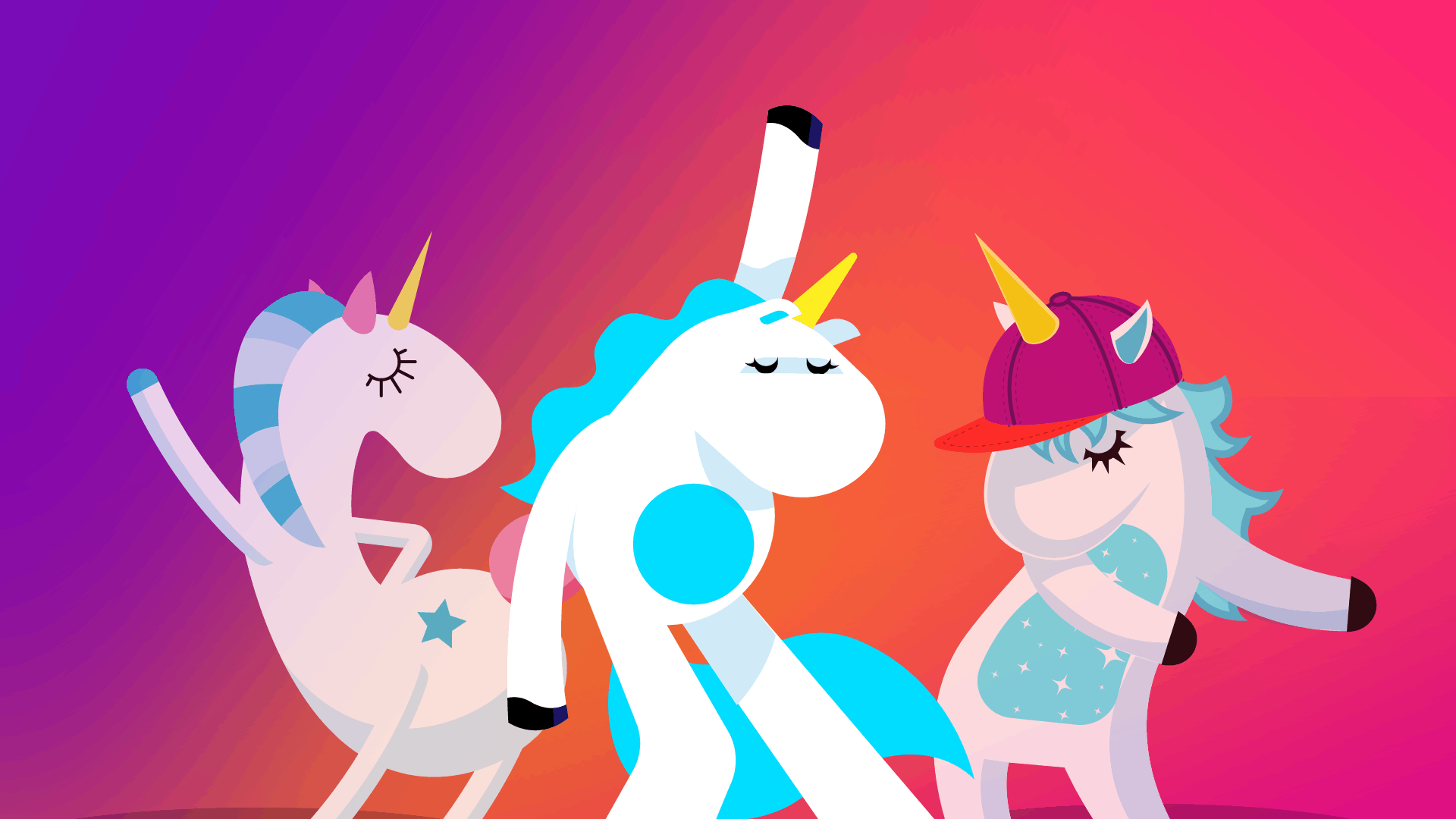
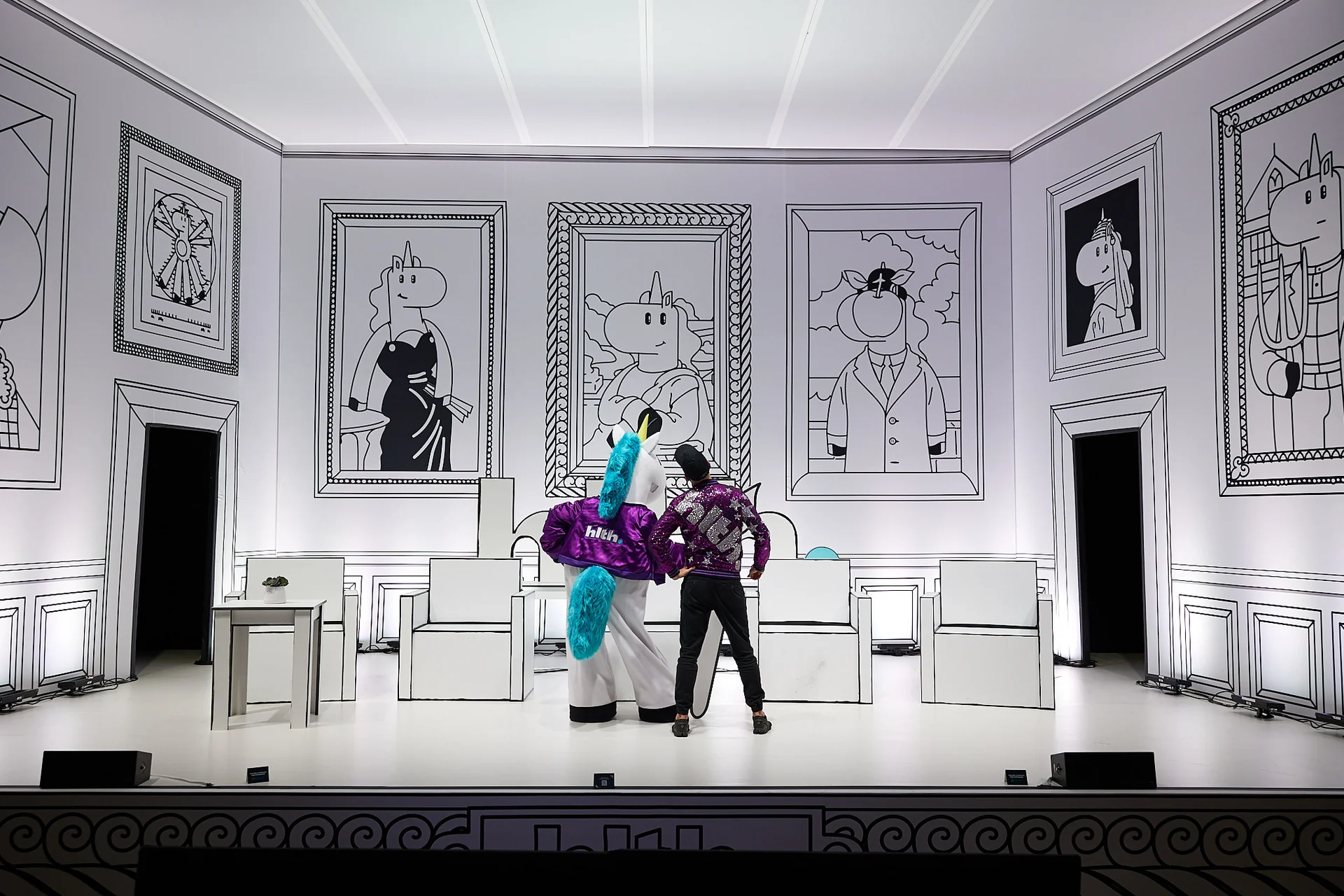
When I was developing the onsite experience, I knew I needed a recognizable character or personification to help bring the brand to life. I intentionally avoided using an ethnically specific human character because I wanted something that felt universally welcoming and inclusive.
At the time, I was also new to the healthcare startup ecosystem. The concept of an "angel startup" was new to me, but I quickly realized what makes our event so unique: we bridge the gap between visionary startups and the investors looking for the next breakthrough company. Founders gain access to funding opportunities and face-to-face conversations that many would rarely have elsewhere, while investors discover companies with the potential to shape the future of healthcare.
That's when the answer became obvious: a unicorn.
Not because startups aspire to become unicorns, but because every person who attends our events is exceptional in their own right. Whomever or whatever they do, they're at the top of their field. Each brings something rare, valuable, and uniquely their own. In that sense, every attendee is a unicorn.
And that's how Petunia was born.
Looking back, was there a moment when you realized she had evolved from a design element into something the community genuinely connected with?
Boston, 2021—our fourth event. Petunia, named at our inaugural event in 2018, had always existed quietly in the background. She was tucked into marketing materials as a hidden Easter egg but never had a true onsite presence. To our team, she was an internal cultural icon—a symbol of the joy, optimism, and occasional absurdity of building a startup from the ground up. We knew our healthcare event was different from every other conference. It was energetic, whimsical, and unexpectedly fun. Petunia embodied that spirit.
After the 2021 Boston event, I found myself at the hotel bar with our CEO, Jonathan Weiner and Nancy Brown, a friend of the company and investor connected to one of our venture capital partners. During the conversation, Nancy casually asked about Petunia. She wanted to see more of her.
My immediate response was, "How do you know her name?" Nancy smiled and said, "Everyone knows who she is."
That was the moment everything clicked. Petunia wasn't just an inside joke anymore. A character we had created for ourselves had quietly become part of the attendee experience. People noticed her. They remembered her. They were asking for more.
That's when I realized Petunia deserved a much bigger role—not just within our team, but at the heart of the event itself...A unicorn isn't an obvious mascot for a healthcare conference.
That's why Petunia works. Once you understand the inspiration—the idea of the startup "unicorn"—everything else starts to make sense. But getting there wasn't without resistance.
Petunia wasn't exactly subtle. She was sassy, unapologetically feminine at times, covered in impossibly long eyelashes, and sported a tiny star tattoo on her hip. In an industry dominated by men (especially at the time), she was about as unconventional a mascot as you could imagine. However, the last thing I wanted was another polished, corporate healthcare brand that took itself too seriously. Petunia was joyful. She was unexpected. She made people smile. More importantly, she gave our team permission to have a personality.
There came a point when someone asked me to remove her from our printed materials. I said, "Sure." Then I didn't. It wasn't because I wanted to be difficult. It was because I genuinely believed she belonged. I knew I wasn't the only one who loved her—our entire team had embraced what she represented. Petunia had become an amalgamation of all of us: optimistic, a little quirky, willing to challenge expectations, and confident enough not to fit the mold.
Call it cocky or overly confident, whatever it is, I was willing to risk being wrong.
The nature of creativity is wonderfully capricious. Sometimes the best ideas arrive long before you can explain why they work. They simply feel right.
Petunia was one of those ideas.
She resonated with our team almost immediately, giving us a creative voice that felt distinctly our own. In an industry often defined by sterile, corporate branding, she gave us permission to be playful, optimistic, and unmistakably human. Long before we understood her broader impact, she had already begun shaping the personality of our event.
Every memorable mascot has a personality, not just a look. How did you develop Petunia's character, and what creative decisions helped transform her from an illustration into the playful, welcoming personality attendees now recognize across our events, marketing, and social channels?When we launched our first event, there was a common assumption about our audience: healthcare professionals were different. Unlike attendees at FinTech or Retail conferences, they were thought to be all business. Serious. Reserved. Not exactly the partying type. We were so incredibly wrong.
Our inaugural closing-night concert with Wyclef Jean was supposed to end on schedule. Instead, we extended it by an hour because no one wanted to leave. When it finally came time to wrap up, our CEO walked on stage to thank everyone for coming and wish them goodnight. The crowd responded with a chorus of "Boooo!" and "Nooooo! Not because they were unhappy—but because they were having too much fun.
That moment taught me something important. Our attendees aren't defined by their professions. They're people first. They're curious, passionate, ambitious, and deeply invested in improving healthcare. They work incredibly hard, and when they're surrounded by others who share that same purpose, they want to celebrate it.
That realization changed how we thought about our event. Why should healthcare conferences feel sterile when the people attending them are anything but? Why not create an experience that's energetic, joyful, and inspiring? One that reflects the humanity of the people working to improve the health of everyone else?
Petunia became the embodiment of that philosophy. She gives us permission to show up as ourselves—to celebrate our individuality, embrace our creativity, and connect with like-minded people who believe that changing the world and having fun aren't mutually exclusive.
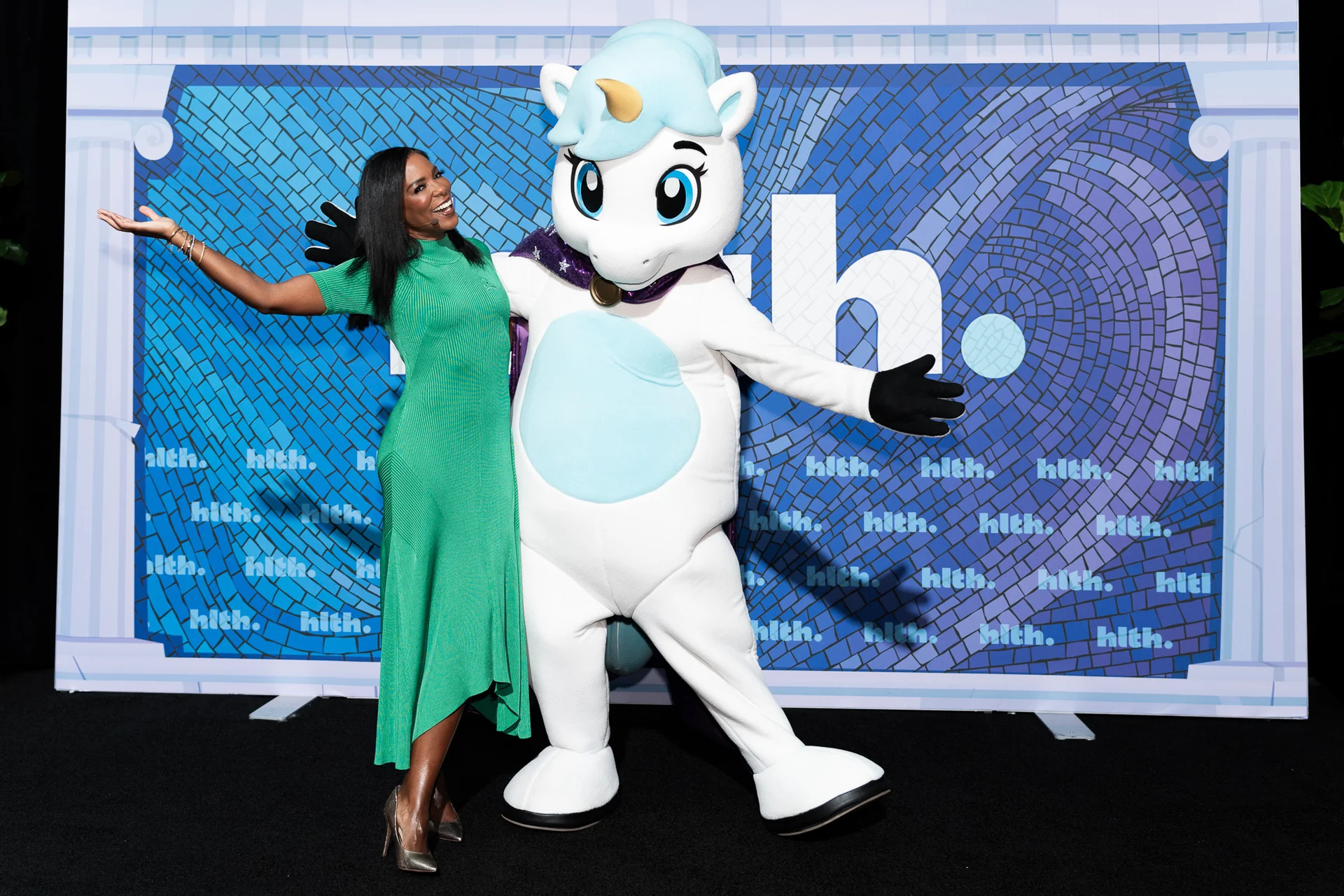
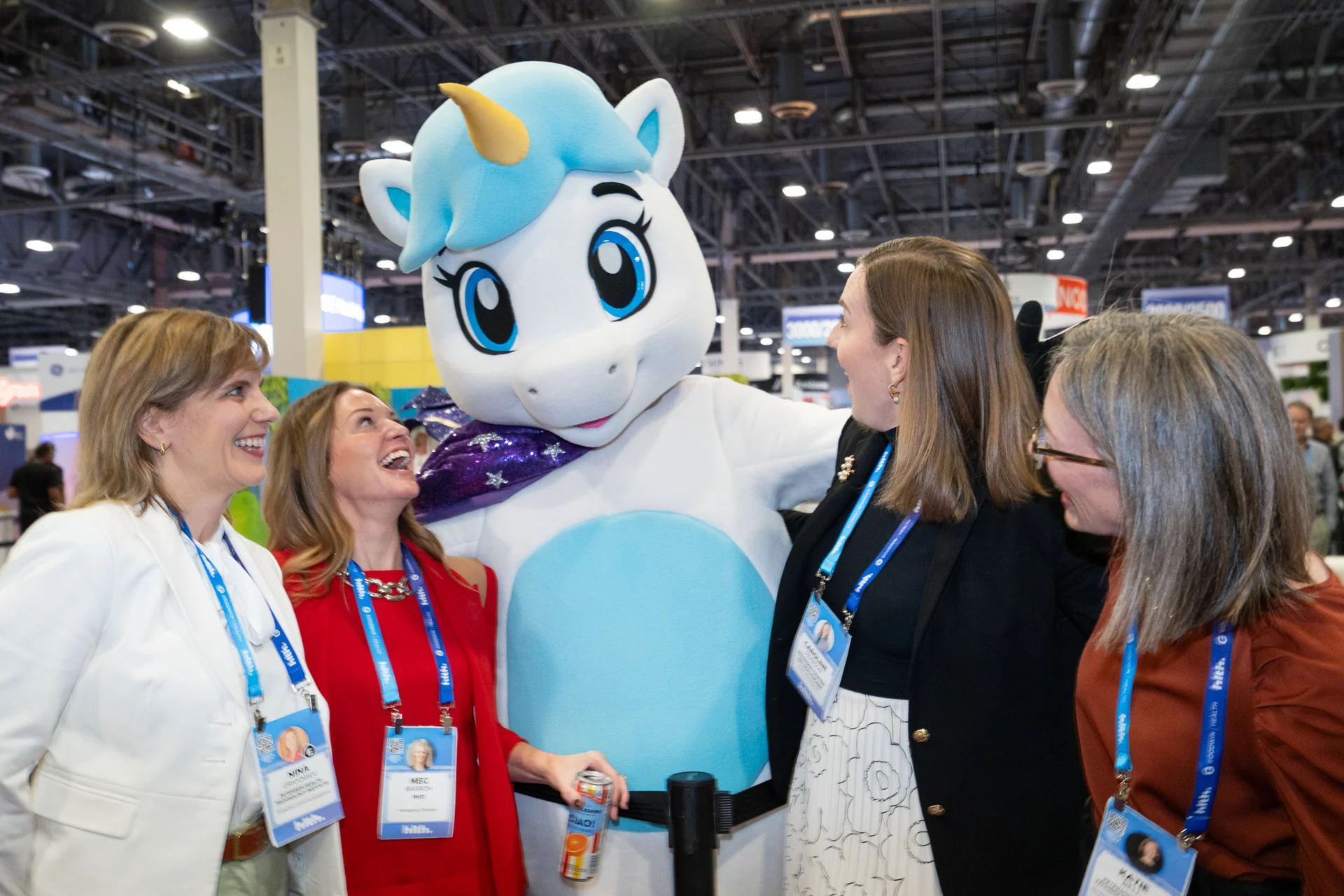
Petunia has gone from appearing on our website to physically greeting thousands of attendees at HLTH USA and HLTH Europe. Why do you think mascots are so powerful for live event brands, and what do they create emotionally that logos or traditional branding simply can't?One thing I've come to appreciate is that even the best creative ideas have to arrive at the right time. Mascots are rarely associated with events like ours. They're commonplace in sports and consumer brands, but introducing a unicorn into a healthcare conference felt like a red card, our audience wouldn't understand why she's there.
A mascot has to feel earned. If it doesn't make sense, it gets relegated to the background and eventually fades into obscurity. Petunia wouldn't have worked at our first event. She probably wouldn't have worked at our second or third, either.
By 2022, however, everything had changed. Our rebrand had given HLTH a distinctive visual identity, but more importantly, our events had already established a personality. Attendees knew what HLTH felt like. They expected energy, creativity and most of all, they craved inspiration. They grew to expect an experience that challenged the conventions of healthcare conferences. Only then was Petunia ready to step out from behind the curtain. She wasn't creating the culture—she was expressing it.
Looking back, that's the part I never could have predicted. If you'd told me in 2020 that Petunia would one day be walking the show floor with a fully booked schedule of appearances, I'd have laughed.
I was far more convinced she was eventually going to get me fired.
If you could go back and tell yourself something on the day you first sketched Petunia, knowing she'd become one of HLTH's most recognizable brand assets, what would you say?
The truth is, I still don't really know why it all worked. I was always wary of people calling it genius because I don't think it was (I humbly don't think i'm a genius). It simply felt right. More importantly, it felt right to the people around me.
If I hadn't had the HLTH team beside me, I don't think Petunia would have survived. Our culture—our willingness to experiment, laugh, trust one another, and occasionally ignore convention—was just as responsible for her existence as any sketch I ever drew. Petunia wasn't the product of one person's creativity. She was the product of a team that genuinely loved building something together.
I also know that none of it would have happened without the trust of our CEO, Jonathan Weiner. Few leaders would have given a designer the creative freedom to take the kinds of risks we took. People in the events industry have told me as much over the years. I don't take that for granted. I'm incredibly grateful for it.
Even now, when someone tells me the implementation of Petunia was "genius," my response is always the same. It wasn't genius, it was personal and playful. It was born out of trust, love for what we were building, and a creative chemistry that I'm not sure I'll ever experience in quite the same way again.
If I could tell my younger self one thing, it would simply be this: Revel in every moment. Embrace the highs and the lows. You'll never reach a point where you feel completely certain that you're making the right creative decisions. Years later, you'll still look back and see things you wish you'd done differently. And that's okay.
Creativity isn't static, and it certainly isn't consistent. It's an ongoing act of imagining something that doesn't yet exist—and having the courage to bring it into the world anyway.
Enjoy the ride.
And where do you see her story going over the next eight years?I honestly can't tell you but that's part of the fun. If the last eight years have taught me anything, it's that Petunia has a way of surprising all of us. I never imagined she'd evolve from a hidden Easter egg into a walking mascot with a devoted following, so I'm hesitant to predict where she'll be eight years from now. I think we've only scratched the surface of her potential.
During a recent conversation with HLTH leadership, someone asked a question that completely caught me off guard: "What would Petunia sound like if she spoke?"
The truth is, I'd never really thought about it.
Growing up in a Deaf household—both of my parents are hearing impaired—the idea that Petunia needed a voice never crossed my mind. To me, she's always communicated through her actions. Her presence, her curiosity, and the way she brings people together have always spoken louder than words.
Rather than simply appearing at our events, I'd love to see her become more deeply involved in the stories that define our community. Imagine Petunia spending time on Capitol Hill, learning why our healthcare system is so complex. Imagine her following entrepreneurs building companies, clinicians caring for patients, researchers chasing breakthroughs, or people living with diabetes, menopause, kidney disease, and countless other health challenges.
I see her becoming more of a storyteller than a spokesperson.
If Petunia has a future, I think it's one rooted in empathy—helping shine a light on the remarkable people throughout the HLTH ecosystem who are working every day to make healthcare better.