
Author:

Healthcare loves a molecule story. We're far less interested in the delivery story, which is strange, because delivery is where many promising molecules encounter their hardest problems.
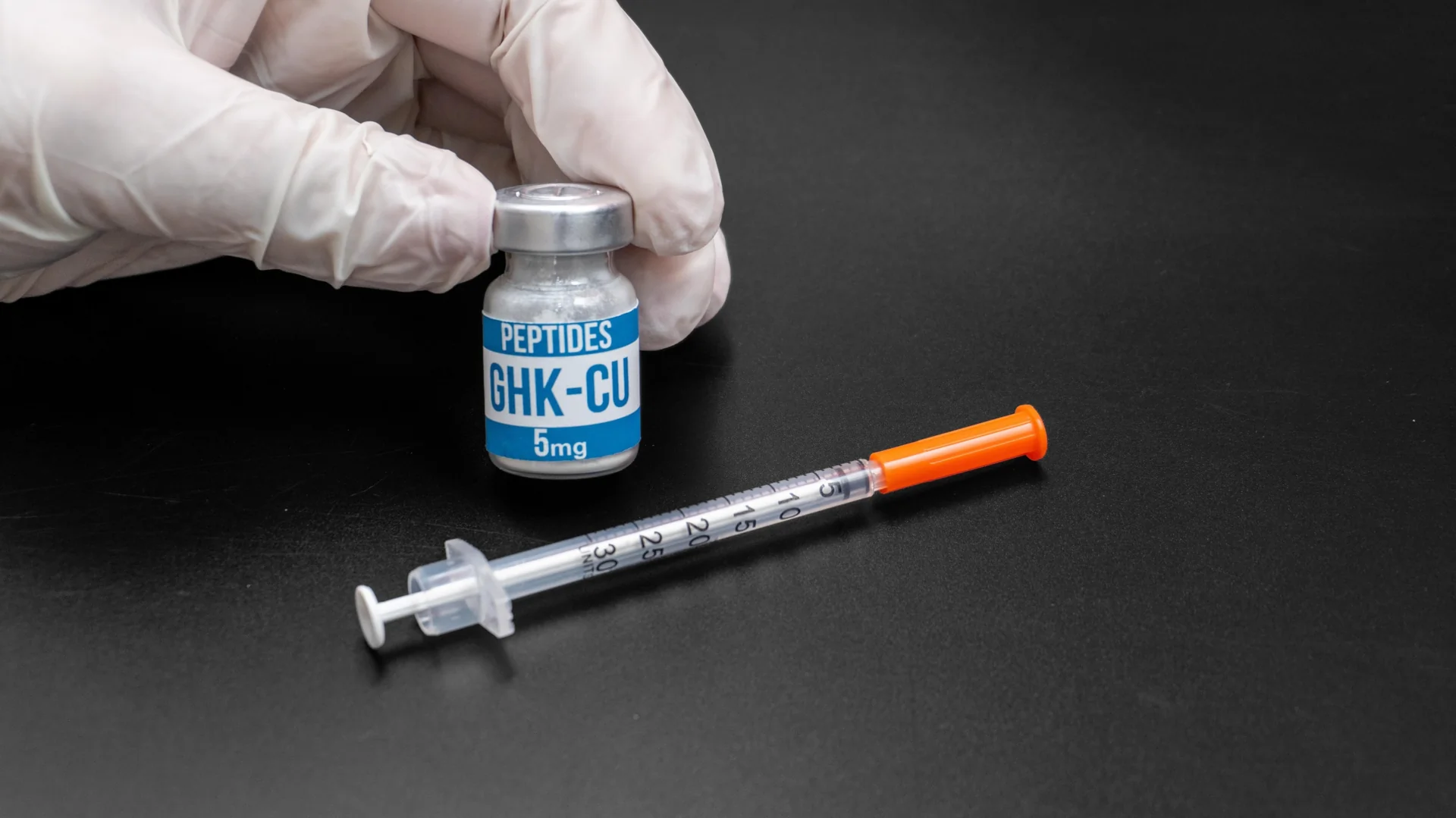
GHK-Cu is glycyl-L-histidyl-L-lysine copper, an endogenous human peptide complex that literature describes as promoting tissue integrity and maintenance.¹ Levels in the body decline with age, and this decline has been associated with various signs of aging.¹
Published research has approached it from several directions:
Collagen — studies suggest GHK-Cu may support collagen synthesis, a crucial protein for skin health, elasticity, and wound tissue.¹˒²
Hair — by helping maintain hair follicle size, GHK-Cu may help promote hair health and thickness.²
Blood vessels — GHK-Cu has been investigated for its potential to promote angiogenesis, the formation of new blood vessels.¹˒²
Healthy aging — studies suggest GHK-Cu may have potential healthy aging advantages along with properties to support cellular wellness and healthy inflammatory responses.¹˒²
All of that is research on GHK-Cu as an active pharmaceutical ingredient (API). None of it is research on a tablet, and none of it establishes that a compounded oral tablet can deliver those potential benefits. Which leaves the question this piece is actually about: can GHK-Cu survive digestion and be absorbed?
Why Oral Delivery Is the Hard Part
Oral drug delivery has well-known obstacles: poor solubility, instability in the gastrointestinal (GI) tract, and variable absorption.3,4 For sensitive molecules, there's also degradation in harsh physiological environments.3,4 None of that is unique to peptides, but peptides run into all of it at once. A tablet may be convenient, but putting an API in one does not establish that it remains available for absorption.
Liposomal technology has been explored in drug delivery for exactly those reasons.3,4 That is the rationale for trying a liposomal approach with an oral peptide, and it is the whole of it. A rationale drawn from category literature isn't a finding about a particular tablet.
What the Liposomal Literature Reports
The following statements are based on general liposomal drug delivery literature and have not been independently verified for this specific compounded product.
In published literature, liposomal formulations have been reported to support the stability of sensitive drugs and safeguard them from degradation in physiological and gastrointestinal environments.3,4
Published research suggests liposomal formulations may feature pharmacokinetic profiles designed to support systemic absorption.3,4
Liposomal encapsulation has been studied for its potential to help shield active ingredients from degradation and maintain product quality and shelf life.3,4
A New Approach. GHK-Cu LPT® Tablets
GHK-Cu LPT® tablets utilize a liposomal formulation approach for oral medication delivery. The preparation is a chewable, bisected 4 mg tablet, prepared for an individual patient pursuant to a valid prescription.
GHK-Cu LPT® is not for use by people with active cancers or by pregnant or breastfeeding individuals. It should not be used in individuals with known allergies to copper compounds or peptides, or in individuals with copper metabolism disorders such as Wilson's disease. It should always be used under medical supervision, with monitoring for adverse effects and discontinuation if serious symptoms occur.
Disclaimer
Compounded medications are specially prepared for identified individual patient needs based on a valid prescription from a prescribing healthcare practitioner and, as such, are not reviewed or approved by the U.S. Food and Drug Administration (FDA) for safety or efficacy. Compounded drugs should only be used in patients whose medical needs cannot be met by an FDA-approved drug. These statements have not been evaluated by the FDA.
The potential benefits described herein are based on published literature regarding GHK-Cu as an active pharmaceutical ingredient generally, and the liposomal advantages are based on general liposomal drug delivery literature. Neither the potential benefits nor liposomal advantages have been independently verified through clinical studies of this specific compounded product. Characterization data presented are intended solely for formulation development purposes; they are not product release specifications, clinical efficacy data, or evidence of therapeutic benefit and should not be interpreted as such.
This information is intended for educational and informational purposes only and should not be construed as medical advice, a health diagnosis, or a treatment recommendation. If you are a patient, always consult your healthcare provider before starting any new medication to determine whether it is appropriate for your individual circumstances. Contact your healthcare provider with any questions regarding a medical condition.
*LPT® is licensed by Strive Pharmacy. Follow all instructions from the prescribing healthcare provider and report any side effects immediately.
References
Dou Y, Lee A, Zhu L, Morton J, Ladiges W. The potential of GHK as an anti-aging peptide. Aging Pathobiol Ther. 2020;2(1):58-61. doi:10.31491/apt.2020.03.014.
Pickart L, Margolina A. Regenerative and protective actions of the GHK-Cu peptide in the light of the new gene data. Int J Mol Sci. 2018;19(7):1987. doi:10.3390/ijms19071987.
Liu P, Chen G, Zhang J. A review of liposomes as a drug delivery system: Current status of approved products, regulatory environments, and future perspectives. Molecules. 2022;27(4):1372. doi:10.3390/molecules27041372.
Chelliah R, Rubab M, Vijayalakshmi S, Karuvelan M, Kannan B, Oh DH. Liposomes for drug delivery: Classification, therapeutic applications, and limitations. Next Nanotechnology. 2025;8:100209. doi:10.1016/j.nxnano.2025.100209.