
Why Subscription Medicine Is Taking Over
Subscription medicine is set to dominate the healthcare conversation over the next decade. In just the past two weeks, several Huddlers—including a few family members—have reached out asking for my take on concierge medicine and other direct care models. I happily pointed them to my previous pieces, “Subscription Health: The Rise of Direct Primary Care” and “Healthcare’s VIP Experience: Inside the Concierge Model.”
But after those conversations, I felt it was time to revisit and update my thoughts on these rapidly evolving models.
In this article, I’ll dive into two of the most talked-about direct care models, explore the trends driving their growth, and even share why I’m seriously considering direct pulmonary care for my future.
Background
Direct care models are a departure from the conventional fee-for-service and insurance-based healthcare models. Traditionally, health insurance is intended to cover unpredictable and expensive medical events, providing financial protection against catastrophic health issues. However, routine care services, such as check-ups, vaccinations, and preventive care, often do not align with the original purpose of insurance, which is to mitigate high, unexpected costs.
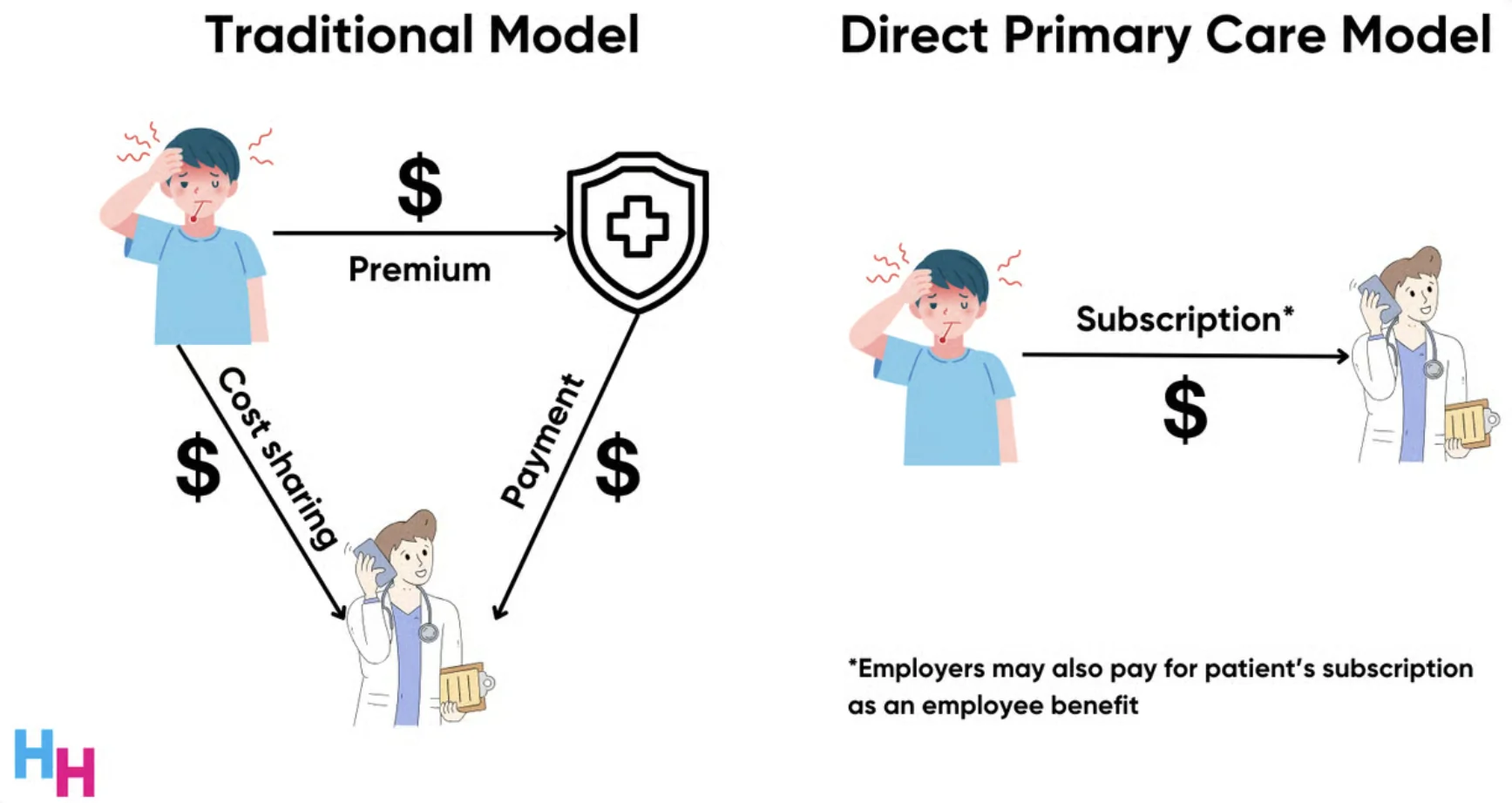
Direct care models cut out insurance and instead operate on a membership or subscription basis, where patients pay a flat monthly fee directly to physicians. Below, I describe two popular models.
Direct Primary Care
Direct Primary Care is similar to concierge medicine but generally more affordable, with a straightforward fee structure. The retainer fee covers all or most primary care services, including clinical, laboratory, consultative services, and care coordination, without additional per-visit charges. DPC practices do not typically accept health insurance, which reduces the overhead and complexity of billing and allows physicians to focus more on patient care.
Here’s a graphic showing the flow of money and care in direct primary care.