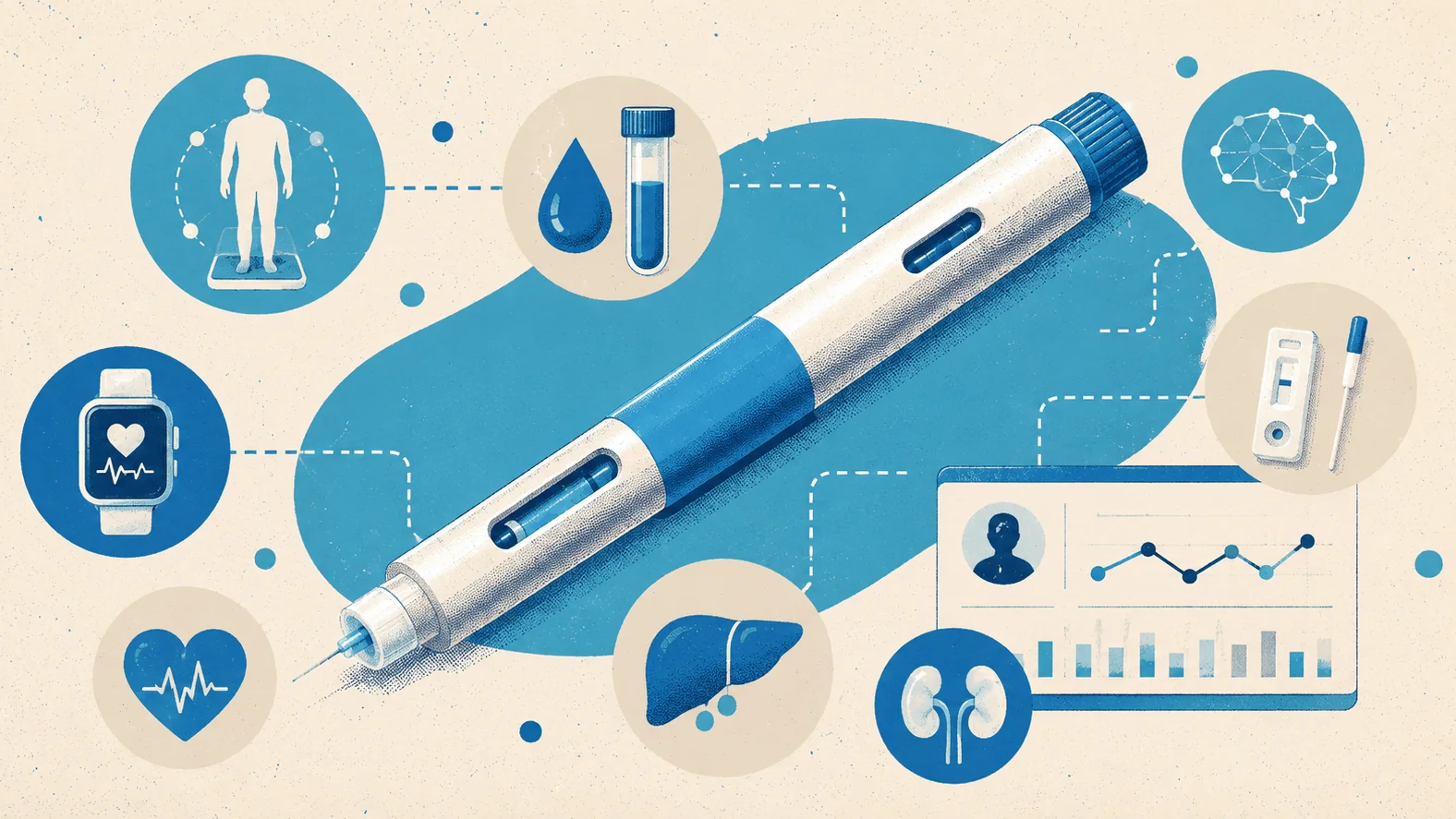

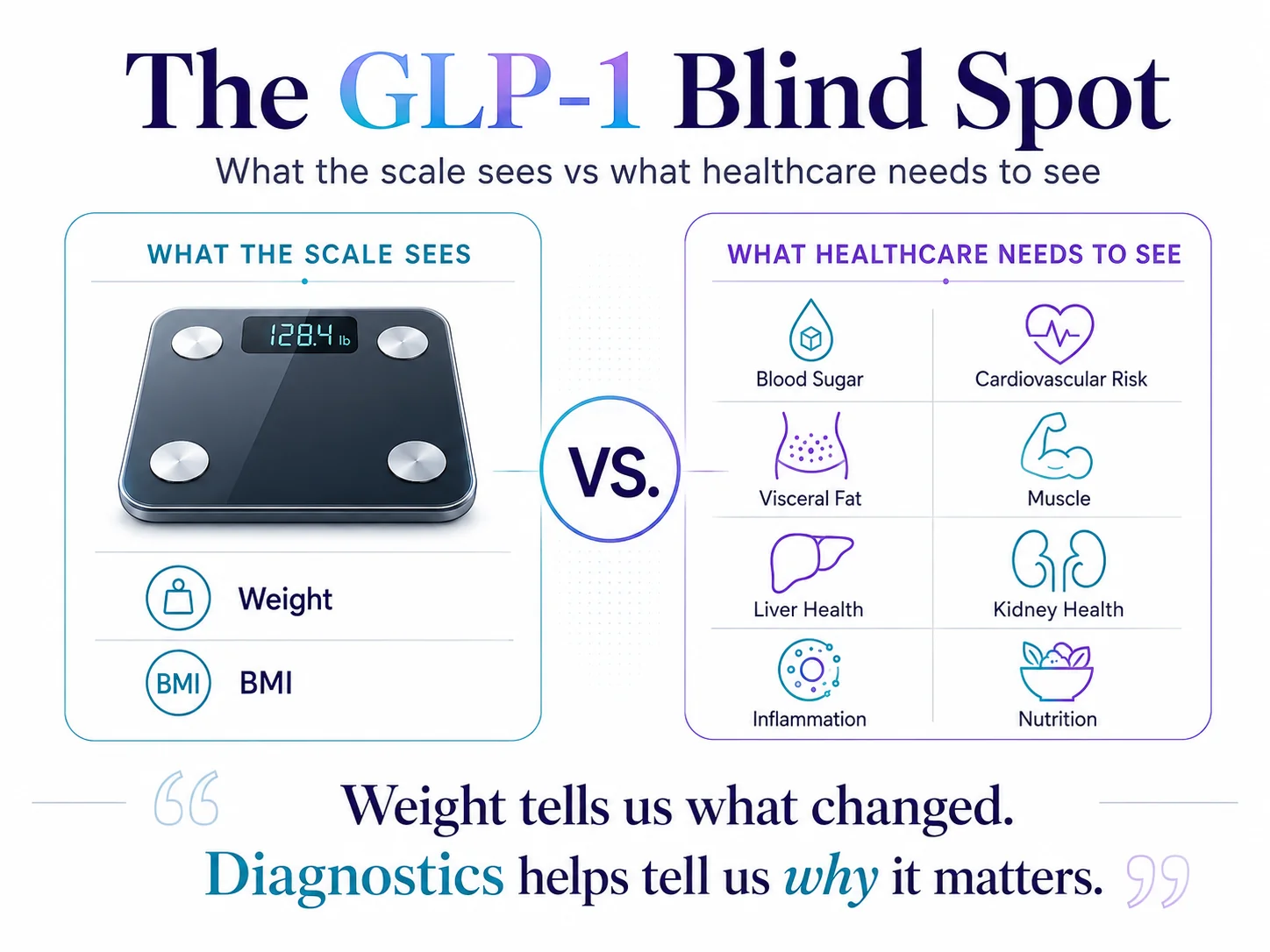
The most visible symbol of the GLP-1 revolution is the bathroom scale.
That may also be one of its biggest blind spots.
There is no question that GLP-1 therapies are changing healthcare. They have transformed obesity treatment, reshaped the pharmaceutical market, accelerated direct to consumer healthcare, and changed how millions of people think about weight and metabolic health.
By late 2025, nearly 1 in 5 American adults surveyed by KFF said they had used a GLP-1 medication at some point, while 12% said they were currently taking one.
But as these therapies become more powerful and access becomes easier, healthcare has to answer a harder question:
What exactly is changing inside the patient?
Losing 15%, 20%, or even 25% of body weight can be extraordinary. But weight alone cannot tell us whether cardiovascular risk improved, whether visceral fat declined, whether insulin resistance changed, whether liver health improved, whether kidney risk shifted, whether nutritional status deteriorated, or whether muscle was preserved.
For that, we need something the bathroom scale cannot provide.
We need diagnostics.
This is where the next chapter of the GLP-1 revolution becomes much more interesting.
We solved access faster than we solved understanding
One of the most remarkable developments around GLP-1 therapy has been the speed at which access has expanded.
These medications are no longer confined to the traditional physician office. They now sit at the center of a rapidly growing ecosystem involving telehealth providers, pharmacies, drug manufacturers, digital health companies, consumer platforms, employers, payers, laboratories, and increasingly the home.
The experience has become easier. A patient can complete an intake form, speak with a provider, receive a prescription, and in some cases have medication delivered without ever entering a clinic.
That progress matters. Healthcare has needed better access and less friction for a very long time. But there is another side to the story.
Have we made it equally easy to understand the biology of the patient receiving the therapy?
A recent JAMA research letter provides a fascinating window into this question.
Researchers approached 49 websites selling GLP-1 therapies using a simulated patient profile. 45 of the 49 sites issued a prescription. The median time to prescription was one day or less, and two compounded prescriptions were issued within 5 minutes. Only 13 sites required a video visit, while only 3 required a call.
Most of the sites did ask about medical conditions and medications, so this was not an absence of clinical intake. Yet only 18 of the 49 asked patients to report clinical values such as blood pressure, glucose, cholesterol, or triglycerides.
The researchers ultimately concluded that many online vendors relied heavily on questionnaires and that clinician engagement could be limited.
It’s not an argument against telehealth. Quite the opposite. Digital health has removed enormous friction from healthcare and opened access for millions of people.
The opportunity now is to remove the friction from objective clinical intelligence as well.
We have made the prescription increasingly frictionless. Now we need to make understanding the patient frictionless.
The definition of success is changing
For decades, obesity has largely been organized around BMI.
BMI is simple and scalable, but it tells us surprisingly little about an individual's biology. It cannot distinguish muscle from fat, cannot tell us where fat is distributed, and cannot tell us how excess adiposity is affecting metabolic health or individual organs.
That thinking is beginning to change.
In 2025, the Lancet Diabetes & Endocrinology Commission proposed a framework that distinguishes preclinical obesity from clinical obesity and defines clinical obesity around objective effects of excess adiposity on tissues, organs, or the function of the individual.
The American Association of Clinical Endocrinology has moved in a similar direction. Its 2025 obesity algorithm emphasizes complication centric, individualized care and optimizing health rather than focusing solely on BMI or weight reduction.
The timing of that shift is fascinating.
At exactly the moment medicine has developed dramatically more effective ways to change body weight, medicine is also recognizing that body weight alone is an incomplete way to define health.
That creates an important opportunity for diagnostics.
Instead of asking only how much weight a patient lost, we can begin asking what that weight loss actually changed.
Did glycemic health improve?
Did cardiovascular risk change?
Did liver health improve?
Did visceral fat decline?
Was muscle preserved?
Did blood pressure improve?
Was there a meaningful reduction in the patient's overall disease burden?
That is a much more important healthcare question.
These are no longer simply weight loss drugs
The term “weight loss drug” itself is becoming increasingly inadequate.
The GLP-1 category has expanded far beyond a number on a scale.
In 2024, the FDA approved Wegovy to reduce the risk of major cardiovascular events in certain adults with established cardiovascular disease and overweight or obesity.
Later that year, Zepbound became the first FDA approved medication for moderate to severe obstructive sleep apnea in adults with obesity.
In 2025, Wegovy received accelerated approval for adults with noncirrhotic MASH and moderate to advanced liver fibrosis.
And in December 2025, the World Health Organization issued its first global guideline for GLP-1 therapies in obesity, framing their use as part of comprehensive chronic care that also includes diet, physical activity, professional support, and long term follow up.
That progression matters because once the treatment becomes multi organ, the measurement system around it has to evolve too.
A scale can tell us that something happened.
Diagnostics can begin to tell us whether it mattered.
This is why I see GLP-1 therapy as one of the clearest examples yet of a broader transformation already taking place across healthcare.
Diagnostics is no longer simply supporting care. It is increasingly becoming the intelligence layer that helps clinicians understand risk, select interventions, measure response, and decide what should happen next.
The real opportunity is closing the loop
Traditionally, we tend to think about diagnostics as something that happens at the beginning of a clinical journey.
A patient develops symptoms. A test is ordered. A diagnosis is made. Treatment begins. The patient may then return months later, or perhaps a year later, for another assessment.
That model works in many areas of medicine, but it is increasingly mismatched with therapies that can change physiology continuously over months and years.
GLP-1 therapy creates an opportunity to think differently.
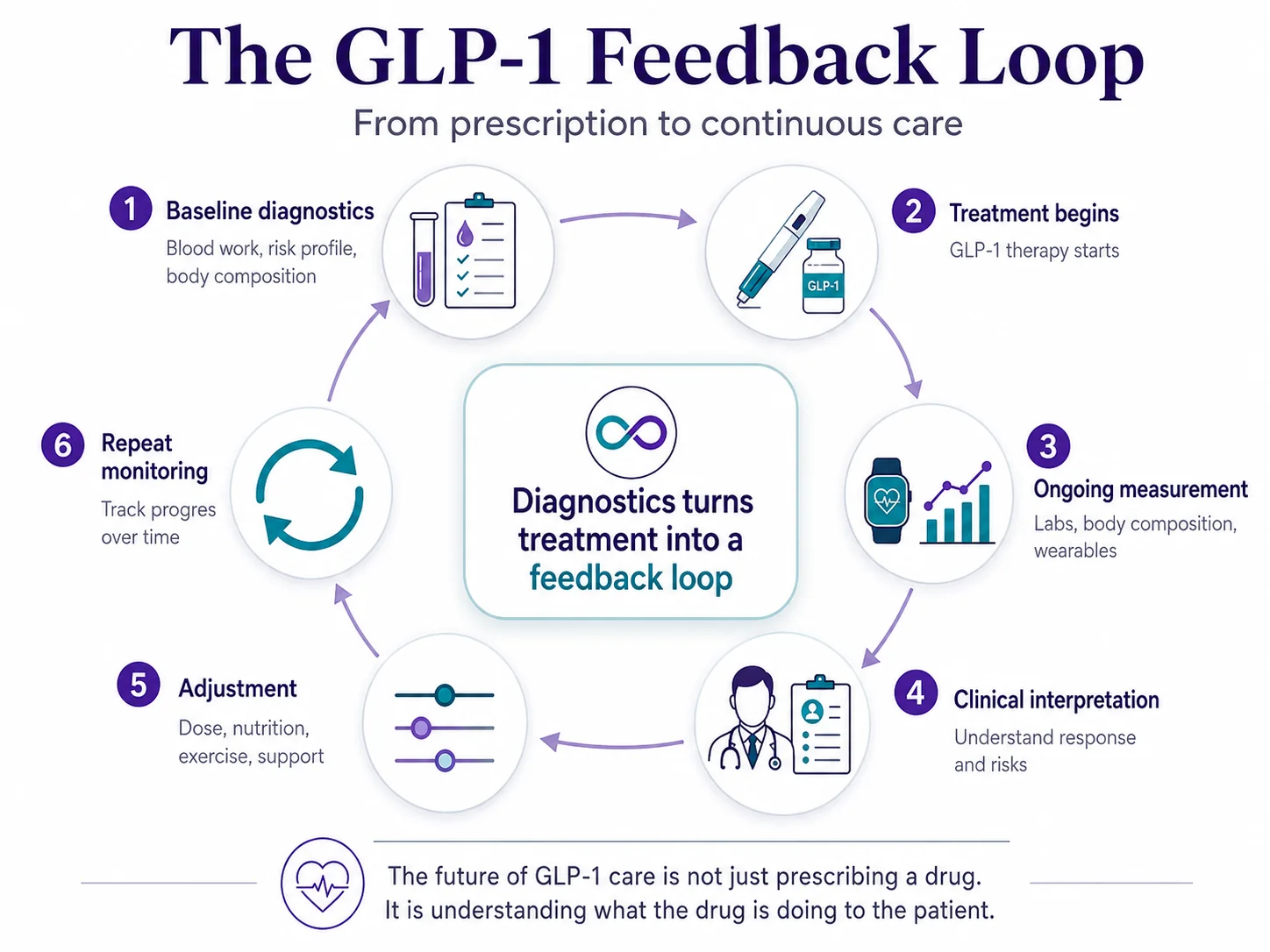
The emerging model is less about testing once and more about creating a feedback loop around treatment. Patient biology is assessed, therapy begins, relevant changes are measured, those results are interpreted in context, care is adjusted where appropriate, and the cycle repeats.
The important point is not that every patient needs a massive panel of biomarkers or monthly testing. The exact measurements should depend on the individual.
Depending on clinical history, risk factors, and treatment goals, the picture might include glycemic health, lipids, ApoB, kidney function, liver health, blood pressure, nutritional status, body composition, or other relevant measures.
We can already see laboratory companies beginning to build around this therapeutic journey. Quest Diagnostics, for example, now specifically describes laboratory testing across the GLP-1 journey, from baseline assessment through treatment monitoring and the period after discontinuation.
That is strategically significant.
It suggests that laboratories may increasingly organize testing not only around diseases, but around therapeutic journeys.
The shift is philosophical as much as clinical.
Diagnostics stops being only a gatekeeper to treatment and starts becoming a feedback mechanism around treatment.
The value of diagnostics increases when the result changes what happens next.
The bathroom scale cannot see body composition
Consider two patients who each lose 40 pounds. The result looks identical on a scale, yet one may have lost predominantly visceral fat while preserving functional muscle, while the other may have experienced a very different change in body composition and metabolic risk.
A body composition substudy from the SURMOUNT 1 trial illustrates the point. Participants receiving tirzepatide who underwent DXA assessment experienced an average 21.3% reduction in body weight at 72 weeks, with fat mass declining 33.9% and lean mass declining 10.9%. Approximately 75% of the lost weight was fat mass and 25% was lean mass. Importantly, a similar proportional split between fat and lean mass loss was observed in the placebo group.
The muscle discussion deserves nuance. Significant weight loss often includes some reduction in lean tissue. The more useful question is which patients are at greatest risk and whether nutrition, resistance training, and monitoring can help improve the outcome.
That question is beginning to attract technologies outside the traditional laboratory.
In May 2026, Samsung and Massachusetts General Hospital announced research examining whether Galaxy Watch measurements of body composition, activity levels, and heart rate could help patients and clinicians monitor muscle changes during GLP-1 therapy.
This pushes the conversation beyond weight alone.
It also shows why the future of diagnostics around GLP-1 therapy may become increasingly multimodal.
Laboratory biomarkers can tell us one part of the story. Body composition tells another. Wearables can add information about activity, sleep, heart rate, and behavior. Imaging can provide another layer. Clinical history gives those signals context.
The real value comes when these data sources begin to work together.
The home may become part of the diagnostic network
Here is where the transformation could accelerate dramatically.
If the consultation can happen at home and the medication can arrive at home, why should every diagnostic interaction require a traditional visit?
Home collection technologies, remote monitoring, wearables, digital diagnostics, and consumer friendly laboratory services are already beginning to move more of the care journey closer to the patient.
In May 2026, Noom introduced an at-home biomarker testing program designed to let members collect a small blood sample at home and follow measures including HbA1c, ApoB, triglycerides, and hs CRP. The program allows members to retest and track progress alongside medication and behavior change programs.
This may look like a home testing product. It's much bigger.
It represents the convergence of pharmaceutical treatment, diagnostics, telehealth, home collection, behavioral health, software, and eventually AI.
The bigger opportunity is not decentralization alone, but integration. Healthcare already has most of the individual components required for a more intelligent metabolic health experience. The challenge is connecting them so that new information can influence the next decision.
A prescription is not a treatment plan
One model I recently came across in Switzerland illustrates this particularly well.
A Swiss digital health company built its medical weight loss program around a combination of detailed medical and lifestyle intake, laboratory diagnostics, physician assessment, monthly body composition measurement, prescription and medication delivery when clinically appropriate, nutrition and resistance training guidance, software, and ongoing monitoring.
What caught my attention was not any single component. Most of these capabilities already exist somewhere in healthcare. The more interesting part is how they are connected.
The program starts by collecting medical and lifestyle context alongside laboratory information. A physician reviews the data before treatment. Body composition is tracked monthly. Lifestyle recommendations are incorporated into the broader plan. Results and trends are brought into the same digital environment so that both the patient and medical team can follow what is happening over time.
That starts to look very different from a prescription service.
Getting access to a medication may increasingly take hours or days. Understanding what that medication is doing to the patient unfolds over months and potentially years. That distinction matters.
A prescription is not a treatment plan.
A prescription is one intervention. A treatment plan should become a learning system that incorporates new information as the patient responds.
The pharmaceutical industry has spent decades optimizing the molecule. Digital health has spent years optimizing access. The next opportunity may be optimizing the feedback loop around the patient.
When patients see what their doctors see
Historically, diagnostics has largely lived on the clinician's side of healthcare. The laboratory performs the test, the physician receives the result, and the patient may receive a portal notification or brief explanation.
Consumer healthcare is beginning to change that relationship. Imagine a patient who can follow the same longitudinal health trajectory their medical team is seeing, from HbA1c and ApoB to body composition and other relevant measures.
The bathroom scale is powerful because it provides visible feedback, but it offers only one dimension.
The scale gives patients a result. Diagnostics can give them a story.
Giving patients visibility into how their biology is changing could turn diagnostics from a clinical event into an important engagement tool, making the patient a more active participant in their own care.
Longitudinal data may become the real AI opportunity
AI adds another layer to this story, but the most interesting opportunity may not be interpreting a single laboratory report. That capability will become increasingly common.
The greater value may come from understanding the patient's trajectory: how biomarkers changed over time, what happened after a dose adjustment, whether body composition improved, which lifestyle interventions were introduced, and how the patient responded.
Imagine an AI system evaluating today's glucose value in the context of baseline biology, medication history, body composition, wearable signals, previous results, symptoms, and clinical interventions.
The value is not simply the AI. It is the accumulated patient context the AI has available to reason over.
Every measurement can enrich that longitudinal record and provide more context for the next decision. We should not overstate what AI can automate clinically today, but its future value may depend as much on the quality and continuity of the underlying data as on the model itself.
Diagnostics will be one of the most important sources of that data.
The next payer question may be bigger than weight
There is another reason diagnostics will become increasingly important.
GLP-1 therapies represent a substantial ongoing investment for patients, employers, health plans, and governments. In KFF polling, 56% of GLP-1 users said the medications were difficult to afford.
That raises a fundamental question about value.
What are we actually buying?
If the answer is simply pounds lost, the conversation remains narrow.
But imagine being able to demonstrate that a patient did not merely become lighter. Their HbA1c improved. Their ApoB declined. Their blood pressure improved. Their liver risk changed. Their visceral fat fell. Their muscle was preserved. Their broader cardiovascular profile moved in the right direction.
Now the conversation is no longer simply about weight loss.
It becomes a discussion about measurable changes in disease trajectory.
That is where diagnostics could become the evidence layer connecting pharmaceutical spending to health outcomes.
For payers and employers, that could mean a much more sophisticated understanding of who is benefiting from therapy and how value should be measured.
For pharma, it could create new opportunities to demonstrate real world outcomes.
For providers, it provides a richer picture of patient response.
And for patients, it can answer the question that matters most: is this therapy improving my health in ways that extend beyond the scale?
The next GLP-1 breakthrough may not be another drug
The GLP-1 revolution began with remarkable pharmaceutical science, but its impact will extend far beyond pharma.
It is already pushing laboratories toward longitudinal testing, moving more diagnostics into the home, bringing wearables closer to clinical care, and creating new opportunities for digital health, AI, nutrition, and payer models.
Medical weight loss may simply be the first major use case for this connected infrastructure. As incretin and peptide therapies expand into new diseases, the specific therapies and biomarkers will change, but the underlying model remains familiar: understand the patient, establish the right baseline, measure response, interpret changes in context, and use that information to guide what happens next.
We may be watching the development of a broader model for delivering complex therapies outside the traditional healthcare setting, with treatment surrounded by measurement, interpretation, and continuous feedback.
There is an important caution. Precision medicine should not mean testing everything simply because we can. Not every GLP-1 patient needs the same tests or the same monitoring frequency. The goal should be smarter measurement, focused on the information that can actually influence the next clinical decision.
Perhaps the biggest shift will be how patients define success. Not simply, “I lost 30 pounds,” but, “I understand what changed in my health.”
Healthcare has become remarkably good at making access more convenient. But convenience is not the end goal. Better health is.
Getting there requires intelligence, context, measurement, and a system capable of learning from what happens next.
That is why Diagnostics is becoming the intelligence layer of healthcare.
GLP-1 therapies may become one of the clearest examples yet.
The breakthrough started with the drug. The next breakthrough may be building a system intelligent enough to understand what that drug is actually doing to each patient.
Because the future of GLP-1 care is not simply a better prescription.
It is a better feedback loop.