
Author:

What if the greatest value of digital health solutions wasn't the technology itself, but the ongoing relationships they create with patients?
The healthcare industry has never had more data than today: Clinical trials, electronic health records, prescription databases, connected devices and digital health solutions all provide valuable information about diseases, treatments, and patient outcomes.
Yet an important piece remains difficult to capture: How do patients actually experience their disease and treatments in everyday life, beyond clinical settings?
Understanding this overall experience in real-world can help answer important strategic questions:
How do patients perceive the effectiveness of their treatments in real-world settings?
Which patients continue to experience symptoms despite receiving treatment?
How do treatment experiences and outcomes differ across patient populations?
What matters most to patients when evaluating their treatment options?
How can we better understand treatment value after a drug reaches the market?
Answering these questions requires more than isolated data points: it requires understanding patients' experiences over time, throughout their treatment journey. At Aptar Digital Health, we believe that patient communities can help bridge the gap between clinical evidence and real-world patient experiences, creating new opportunities to generate real-world insights and inform strategic decisions.
From Digital Solutions to Meaningful Patient Relationships
Our definition of patient community is much more than a group of people who have downloaded a health app. It is a population of patients continuously engaging with their digital solutions because it provides them meaningful value in managing their health.
Imagine someone living with migraine who regularly uses an app to understand their triggers, track attacks, and evaluate how treatments affect their daily life. Or someone with multiple sclerosis who tracks and monitors physical activity fatigue level, cognitive capabilities to better understand their condition's progression between medical appointments. These constant interactions help patients recognize patterns, better understand their health, and have more informed conversations with healthcare professionals.
But they also create something valuable for the broader healthcare ecosystem: an ongoing connection with patients and a deeper understanding of their experiences over time. The principle is simple: when the digital solution delivers meaningful value to patients, they're encouraged to continue their engagement. And when that engagement continues, opportunities emerge to better understand how the disease and treatments affect patients in the real world.
Unlike traditional research approaches that often capture patient experiences at specific moments, patient communities can provide opportunities to understand how those experiences evolve over time.
Turning Everyday Experiences into Actionable Real-World Insights
Through ongoing digital engagement, patient communities can help generate longitudinal, patient-reported information about symptoms, treatment experiences, disease burden, and daily-life impact. Combined with dedicated research initiatives, these communities create opportunities for pharmaceutical companies to explore important questions across the treatment journey.
Understanding real-world treatment experiences
How do patients perceive treatment effectiveness?
What impact does treatment have on their symptoms, daily activities, or quality of life?
What challenges do they encounter while managing their condition?
Patient-reported insights can provide additional context on treatment experiences beyond what is typically captured in clinical settings.
Identifying unmet needs and patient populations
Even when receiving treatment, some patients continue to experience symptoms or limitations in their daily lives. Understanding these experiences across different patient populations can help reveal unmet needs and opportunities for further research or patient support.
Exploring treatment differentiation and patient preferences
What matters most to patients when evaluating their treatment options?
How do they perceive treatment benefits, tolerability, convenience, or impact on everyday activities?
Understanding these perspectives can help pharmaceutical companies explore potential treatment differentiators and inform evidence-generation and brand strategies.
Supporting research and post-launch evidence generation
Established patient communities can also create opportunities to engage relevant populations in surveys, observational studies, and other research initiatives. This can help pharmaceutical companies investigate specific questions, generate additional evidence, and better understand patient experiences throughout a treatment lifecycle.
These capabilities can help translate everyday patient experiences into insights that inform research priorities, patient support initiatives, evidence-generation strategies, and broader brand decisions.
Creating Value Across the Healthcare Ecosystem
The potential of patient communities extends beyond data generation. Their value comes from connecting the needs of patients with opportunities to improve research, treatment understanding, and healthcare delivery.
For patients, digital communities provide accessible tools, tracking capabilities, personalized reports and ongoing support to help them better understand and manage their conditions.
For healthcare professionals, patient-generated insights consolidate into timed reports can provide additional context about symptoms, treatment experiences, and daily-life challenges between appointments, supporting more informed conversations.
For pharmaceutical companies, patient communities offer opportunities to better understand treatment experiences, identify unmet needs, engage relevant populations in research, and generate real-world insights that can inform strategic decisions throughout a product's lifecycle.
For the broader healthcare system, these insights can contribute to a more comprehensive understanding of patients' needs and support the development of more personalized, patient-centered approaches to care.
Building Patient Communities That Connect Experience with Evidence
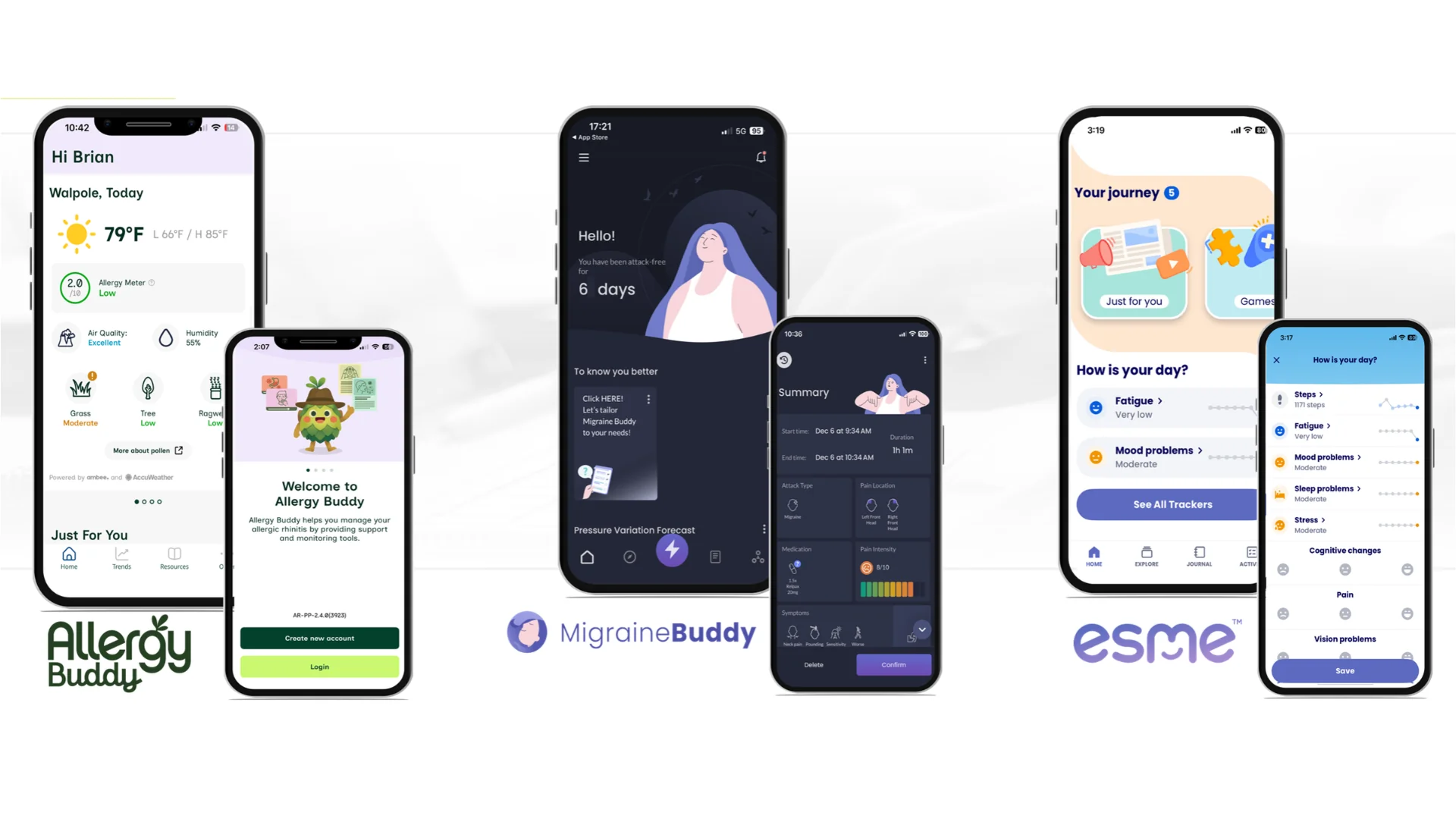
At Aptar Digital Health, this approach is already taking shape through our portfolio of digital solutions, including Migraine Buddy for migraine, Esme for multiple sclerosis, and Allergy Buddy for allergic rhinitis. Each community begins with the same objective: delivering meaningful value to patients in managing their conditions.
By supporting patients in their everyday lives, these solutions create opportunities for continuous engagement and a deeper understanding of disease burden, symptom evolution, and treatment experiences.
For life sciences companies, this patient-centered approach opens possibilities to explore real-world treatment questions, conduct dedicated research, and generate insights that complement traditional healthcare data sources.
As digital health continues to evolve, combining patient-reported information with connected devices, wearables, and disease-specific data (such as imaginary for dermatological condition for example) could provide an even richer understanding of health and treatment experiences in the real world.
The future of digital health may be about creating lasting patient relationships that turn everyday experiences into meaningful insights. Because behind every data point, there is a patient experience. Understanding those experiences can help shape better research, better treatment strategies, and an more patient-centered healthcare approach.
What could a deeper understanding of real-world patient experiences reveal about your therapeutic area or treatment portfolio?
Join Aptar Digital Health at HLTH USA 2026, Booth #4218 for a dedicated session or explore aptardigitalhealth.com to learn how patient engagement can translate into meaningful real-world insights and evidence.