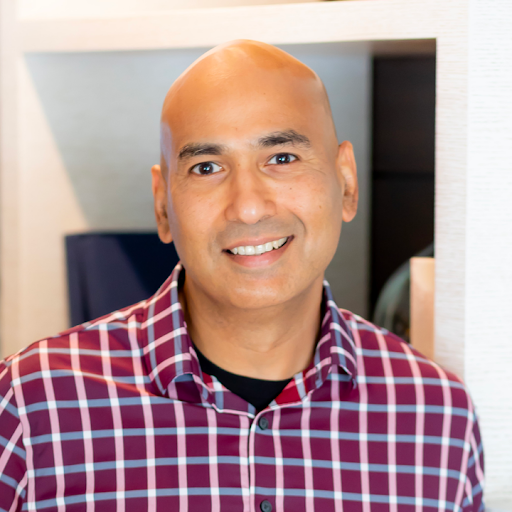
“It's not a fault of AI. AI is just going to work off the knowledge it has. And if it has the wrong knowledge, it's going to recommend you wrong things.” - Imran Qureshi
AI is already changing how consumers make healthcare decisions. But can we trust its answers if it doesn't have a complete and accurate picture of our health?
In this episode of Health's Beat, host Sandy Vance talks with Imran Qureshi, Chief Technology Officer and Chief AI Officer at b.well Connected Health, about the data foundation required to make healthcare AI safe, accurate and trustworthy at scale.
Imran explains why healthcare interoperability is still too dependent on patients carrying information between providers, how AI is unlocking valuable insights buried in unstructured clinical data, and why incomplete or inaccurate health records can lead even powerful AI systems to confidently deliver the wrong answer.
As consumers turn to AI for more complex health questions, Imran argues that the next challenge isn't simply making AI more powerful. It's giving AI the complete, refined and trustworthy data it needs to truly know the patient.
In this episode, they talk about:
Why trustworthy healthcare AI starts with complete, accurate health data
How AI is unlocking the unstructured clinical data traditional interoperability couldn't
Why patients shouldn't have to serve as healthcare's interoperability layer
The rise of AI-powered patient scribes and consumer-controlled health information
Why doctors may evolve from healthcare "oracles" to trusted Sherpas
What happens when confident AI is fed incomplete or incorrect patient data
How refined health data can make AI answers safer and more personalized
Why consumers are turning to AI for increasingly complex healthcare decisions
A Little About Imran:
Imran was previously Chief Data Science Officer of Clarify Health Solutions, a pioneer in machine learning-enabled care optimization. Before that, Qureshi was Chief Software Development Officer for Health Catalyst, a provider of data and analytics technology, where he led the engineering team that built the company's Data Operating System (DOS). Prior to Health Catalyst, Qureshi held roles such as CTO of Acupera, a care coordination platform for clinical and socio-behavioral care, and VP of Engineering at CareAnyware, the largest SaaS provider to home health care and hospice agencies. He holds 10+ patents and has been part of two successful exits (CareAnyware sale in 2012 and Health Catalyst IPO in 2019). He has been responsible for annual budgets in excess of $20M.