

Author:
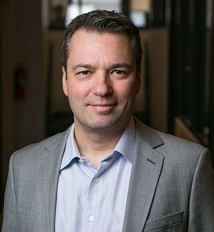
Vizient leaders discuss how connected intelligence can help health systems make faster, more informed decisions and improve the outcomes that matter most.
The ability to identify the right signal at the right time to inform the right decisions has long been at the top of healthcare leaders’ wish lists. But as the industry faces an unprecedented confluence of pressures, that capability has shifted from a nice-to-have to a necessity. After all, a rapidly evolving healthcare ecosystem demands equally fast-moving, data-informed strategic decisions.
Enter “intelligent orchestration,” a concept that integrates data, insights, and expertise to help leaders understand what’s driving an outcome, determine what to do next, and act on the opportunity. Here, Vizient Chief Product Officer Dr. Shannon Sims and Vizient Senior Vice President of Research and Development Dr. Robert Lord discuss what intelligent orchestration means for healthcare, why it matters now, and how it helps health systems move from signal to action.
The term “intelligent orchestration” is becoming more widely adopted across industries, particularly related to enterprise AI and digital automation. How do you define intelligent orchestration in a healthcare context, and how can it help health systems improve clinical quality, financial sustainability, and strategic growth?
Dr. Lord: You can use data to make a report or to see a pattern, but it's not going to tell you where an actual opportunity is. The power of intelligent orchestration is that it leverages advances in AI and automation to take that underlying data, separate the signal from the noise, and identify what’s driving a particular outcome.
A signal might be that you have a length-of-stay increase in your neurology unit, but there's still insight that's needed as to why that’s happening. Is it related to challenges with discharge? A clinical pathway? Escalations to a different level of care? Getting to that root cause is essential, as is figuring out how to address it. You can have that insight, but if you can’t translate it into a specific intervention, it doesn’t lead to action. That intervention could address an outcome, support your enterprise strategy, or apply to your supply chain. It’s a universal concept for understanding what’s driving unwanted variation and determining how to address it.
Intelligent orchestration also provides a pathway to act on those insights. Once you understand the root cause, the questions become: What have your peers done to improve that outcome, and how can we ultimately drive it to last-mile impact? That’s how I think about the chain of activity.
Dr. Sims: One client said to me, “Somebody’s got to bring it all together.” That’s how I think about intelligent orchestration: connecting information, insights, and expertise in ways that enable actions that otherwise wouldn’t be possible.
How can these capabilities help leaders identify and prioritize the highest-impact opportunities?
Dr. Lord: An enormously important part of intelligent orchestration is integrating different data sources, capabilities, and insights. Managing a modern health system requires insights from historically siloed data, regardless of your role. A CQO can’t improve quality without understanding elements of the budget; they don’t have infinite resources. A CFO can’t simply cut staff without considering the impact on outcomes if those savings come from needed clinical services.
If we can’t make decisions in silos, then how do we personalize insights for a particular user? Intelligent orchestration doesn’t work at the data-silo level; it works at the decision and action level. All the information needed to make a decision and drive action should be presented to you, wherever that decision sits in the enterprise.
Dr. Sims: If you’re a CQO, you certainly have an interest in the financials, but your primary mandate is clinical quality outcomes and the patient experience. Our vision of intelligent orchestration is that an LLM can adapt, get to know you as a person, tailor its responses, and suggest additional information based on your needs.
We pull relevant insights from the right places and deliver them to people in their roles. They can expand out as needed, but the idea is to create a personalized set of insights and recommendations based on who they are and the specific problem they’re trying to solve.
No doctor gets trained in P&L, depreciation of assets, and all the other aspects they might need to consider. Our job is to deliver insights in a way that helps them make decisions and understand when to bring in other experts.
If intelligent orchestration works as intended, what should health system leaders be able to do three years from now that they can’t do today?
Dr. Sims: They need to be able to make big market- and client-facing decisions at a much faster pace. For example, everyone knows they need to shift orthopedic care to outpatient settings, including hips, joints, and other procedures. The challenge is that they don’t know the total cost of doing so, including overhead, nursing, billing providers, devices, medications, and other expenses. They can’t just go to one place to figure out what it costs or what good looks like in that space.
Three years from now, they should have a tool that shows them what good looks like and what margin they can achieve in their market under specific assumptions. It would help them determine whether they have the right levers to maintain quality and margin or whether they should focus on cardiac or oncology care instead.
Dr. Lord: We’re in the midst of a generational challenge, and leaders will face decisions they’ve never encountered before, including how to move care to ambulatory settings, protect margins, and adopt new care and payment models. A new slate of tools may help solve these challenges, but we have to apply them thoughtfully and avoid worsening mortality or morbidity. We’re talking about real human lives, not a small financial experiment.
Navigating that tension at the right velocity will be the challenge of our decade. But based on my conversations with leaders across the country, I believe these teams are ready to tackle it.